Japandi Bathroom Design
Try Japandi Style on Your Bathroom →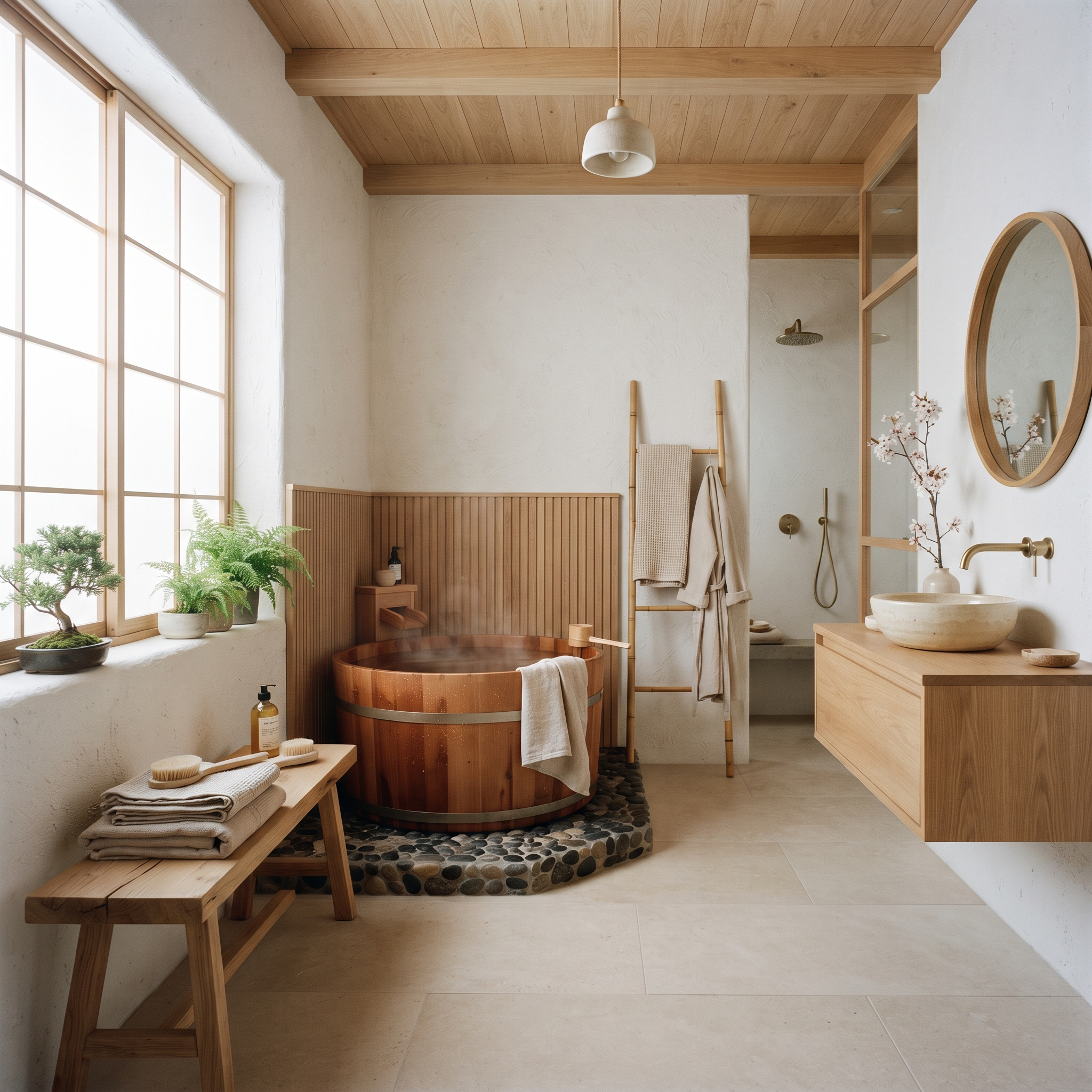
What is Japandi Bathroom Design?
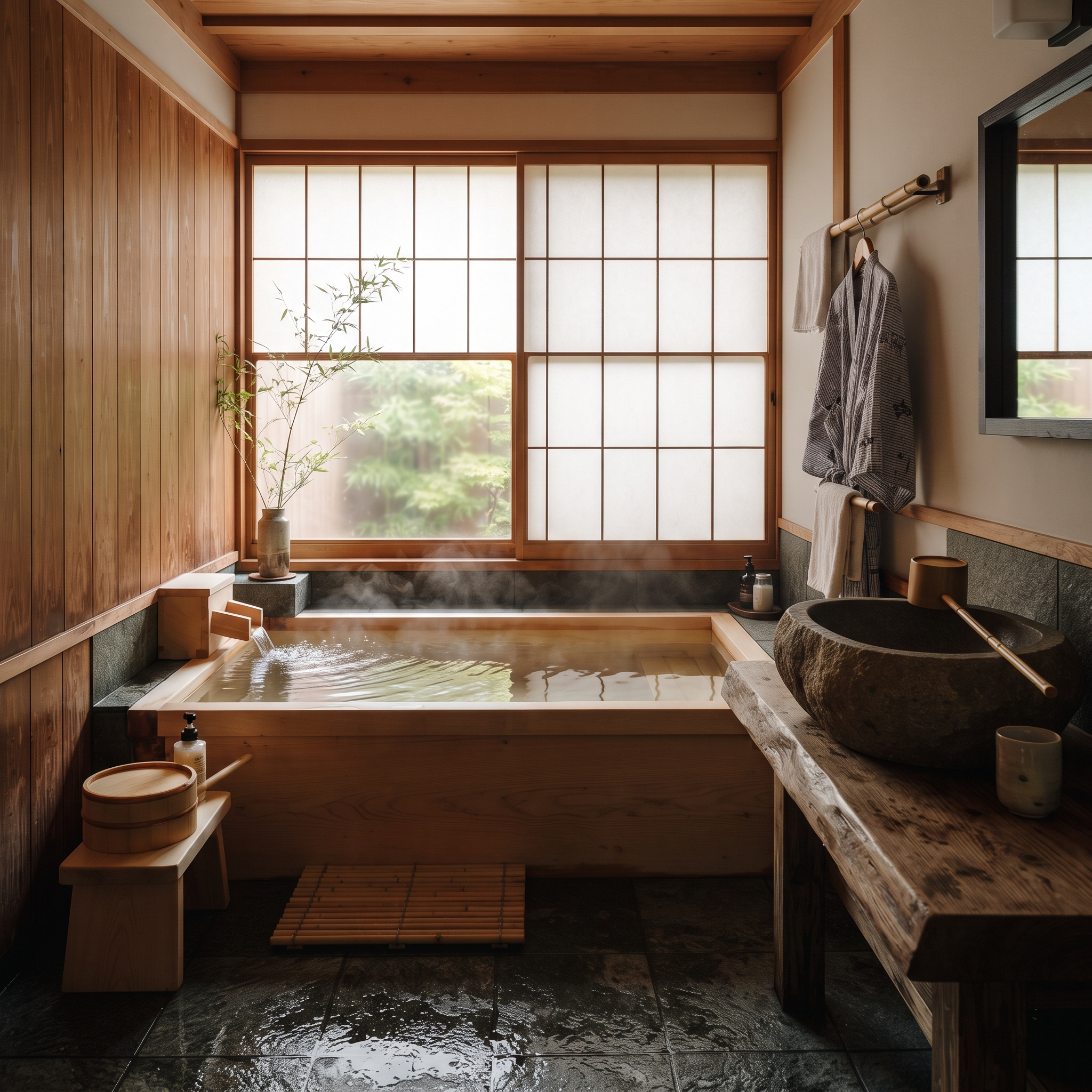
Japandi bathroom design is the quiet meeting of Japanese restraint and Scandinavian warmth. The two traditions share a respect for natural materials, low-contrast palettes, and uncluttered space, and a Japandi bathroom leans into that overlap. Surfaces are matte and tactile — limewashed walls, pale oak or hinoki wood, microcement, and stone in soft greys and warm creams. Furniture sits low: a platform tub, a floating vanity close to the floor, a wooden stool for washing. The palette never strays far from nature — mushroom, sand, oat, slate — and a single branch of seasonal foliage in a vase often provides the only decoration. Lighting is warm and indirect, hidden behind timber battens or tucked under a floating shelf. Unlike pure minimalism, which can read as cold, a Japandi bathroom introduces texture through handmade ceramics, linen textiles, and visible wood grain. The room should feel like a quiet pause — a space where the day slows down and the eye has nowhere urgent to land.
Key Characteristics of a Japandi Bathroom
- Low-profile furniture: platform tub, floating vanity near the floor, and a wooden washing stool
- Matte tactile surfaces including limewashed walls, microcement, pale oak, and soft grey honed stone
- Low-contrast natural palette built from mushroom, sand, oat, slate, and warm cream tones
- Warm indirect lighting hidden behind timber battens or tucked beneath a floating oak shelf
- Handmade ceramics and unglazed stoneware basins that show the maker's marks and irregular edges
- Seasonal foliage or a single branch placed in a vase serves as the only decoration
- Linen textiles and visible wood grain add warmth without ever introducing clutter or pattern
Best Materials
Japandi Bathroom Ideas for Every Space
Small Bathroom
Pale oak floating vanity, microcement walls in warm grey, unglazed ceramic basin, and a single linen hand towel — calm in a compact footprint.
Master Bathroom
Low platform tub in hinoki wood, floating double vanity, walk-in shower with stone floor, timber-batten lighting, and a branch of foliage in a vase.
Powder Room
Wall-mounted handmade ceramic basin, limewashed walls in oat, oak mirror frame, and one warm sconce hidden behind a timber batten.
How Much Does a Japandi Bathroom Remodel Cost?
Japandi bathrooms sit in the mid-to-upper range because handmade and natural materials cost more than mass-produced equivalents. Pale oak vanities run $1,200–$3,500. Microcement on walls and floors costs $50–$100 per square foot installed. Limewashed walls are affordable ($4–$12 per square foot) but need a skilled applicator. Hinoki wood tubs are a premium import ($3,000–$8,000); a stone or acrylic alternative reads similarly for less. Handmade ceramic basins cost $300–$900 versus $100 for mass-market. The signature warmth comes from textiles and timber accessories ($200–$600 total). The smartest spend: microcement and a quality oak vanity — together they define the look.
Frequently Asked Questions
What is the difference between Japandi and minimalist?
Minimalist strips a room back to bare surfaces and pure function. Japandi keeps the restraint but adds warmth through natural materials, handmade ceramics, and visible wood grain. Minimalist feels architectural; Japandi feels handmade and lived-in. Both share clean lines, but Japandi is softer and more textured throughout.
What is hinoki wood and why is it used in bathrooms?
Hinoki is a Japanese cypress prized for its scent, rot resistance, and fine straight grain. It is the traditional material for soaking tubs and bathing stools in Japan. It costs more than oak but performs beautifully in wet conditions and releases a citrus-pine aroma when damp.
Can I create a Japandi bathroom on a budget?
Yes. Use microcement-look porcelain instead of real microcement, an off-the-shelf pale oak vanity, and a handmade-look ceramic basin. Paint walls in warm limewash-effect paint. The look comes from restraint and tone, not expensive materials, so keep the palette tight and skip patterned tile entirely.
Explore More Bathroom Design Styles
Ready to see japandi style on your bathroom?
Upload Your Photo →