Biophilic Bathroom Design
Try Biophilic Style on Your Bathroom →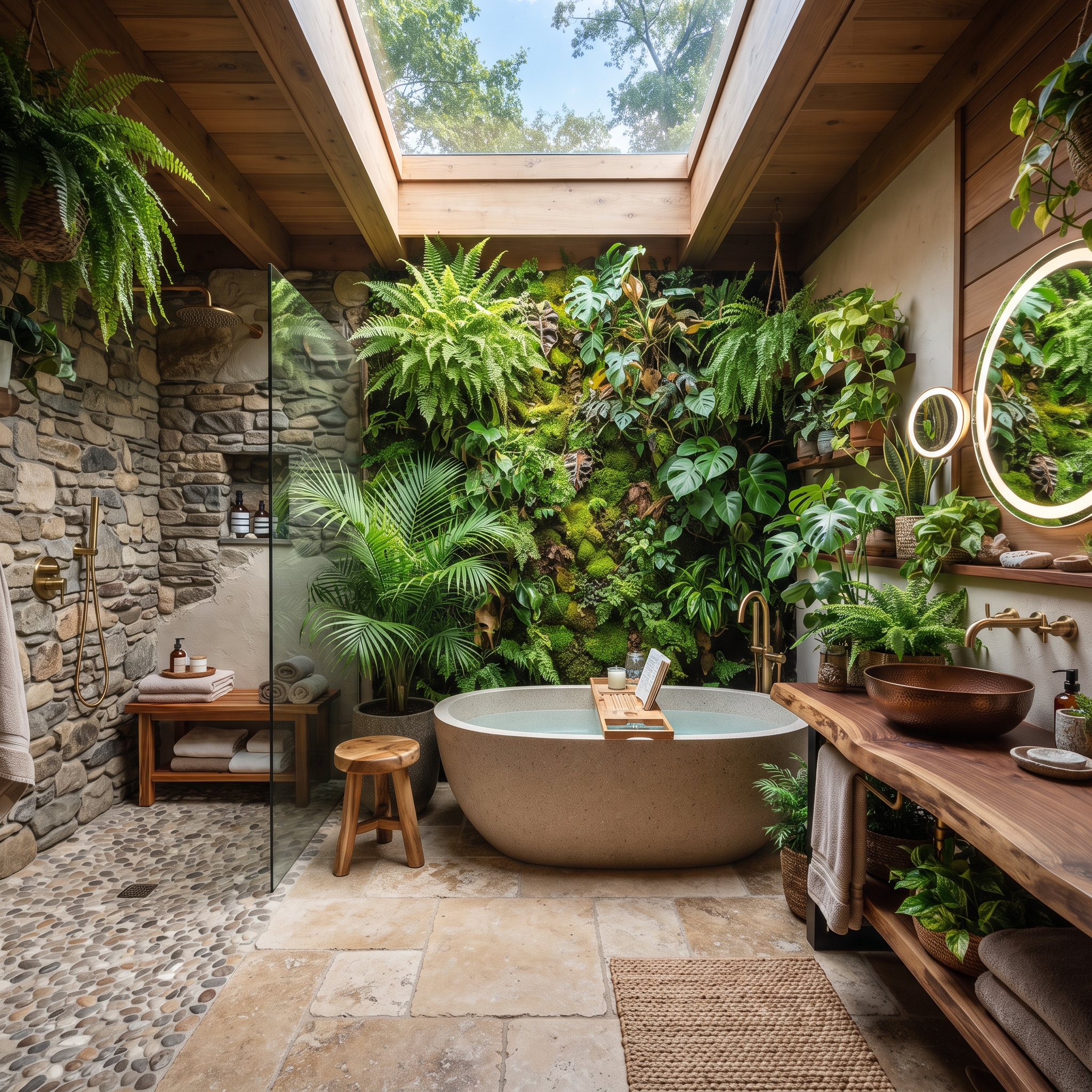
What is Biophilic Bathroom Design?
A biophilic bathroom is designed around the idea that humans feel calmer and healthier when surrounded by living nature. Unlike a generic spa bathroom, a biophilic bathroom integrates actual plants, natural daylight, and organic forms directly into the architecture rather than as decoration. The signature is a living green wall — ferns, moss, or trailing pothos growing in a vertical panel — paired with a skylight or large window that lets real sunlight reach the foliage. Materials stay raw and recognisable: rough stone, unfinished teak, cork flooring, rammed earth plaster. A biophilic bathroom might position the soaking tub beside a window framing a tree, or run a pebble strip along the shower floor that massages bare feet. Water features — a small trickling basin, a rainfall shower — mimic natural sound. Colours stay grounded in leaf green, bark brown, stone grey, and sky blue. The goal is a measurable drop in cortisol when you walk in. Done well, a biophilic bathroom feels less like a room and more like a clearing in a forest.
Key Characteristics of a Biophilic Bathroom
- Living green wall or vertical plant panel — moss, ferns, pothos, or trailing species
- Maximised natural light through skylights, large windows, or glass doors to greenery
- Raw recognisable materials: rough stone, unfinished teak, cork, rammed earth plaster
- Views onto real plants and trees, framed deliberately from the tub or vanity
- Natural sound — trickling water, rainfall shower heads, or a small indoor water feature
- Organic curved forms — river-pebble shower floors, rounded basins, undulating walls
- Natural ventilation and a clear sense of airflow through operable windows or vents
Best Materials
Biophilic Bathroom Ideas for Every Space
Small Bathroom
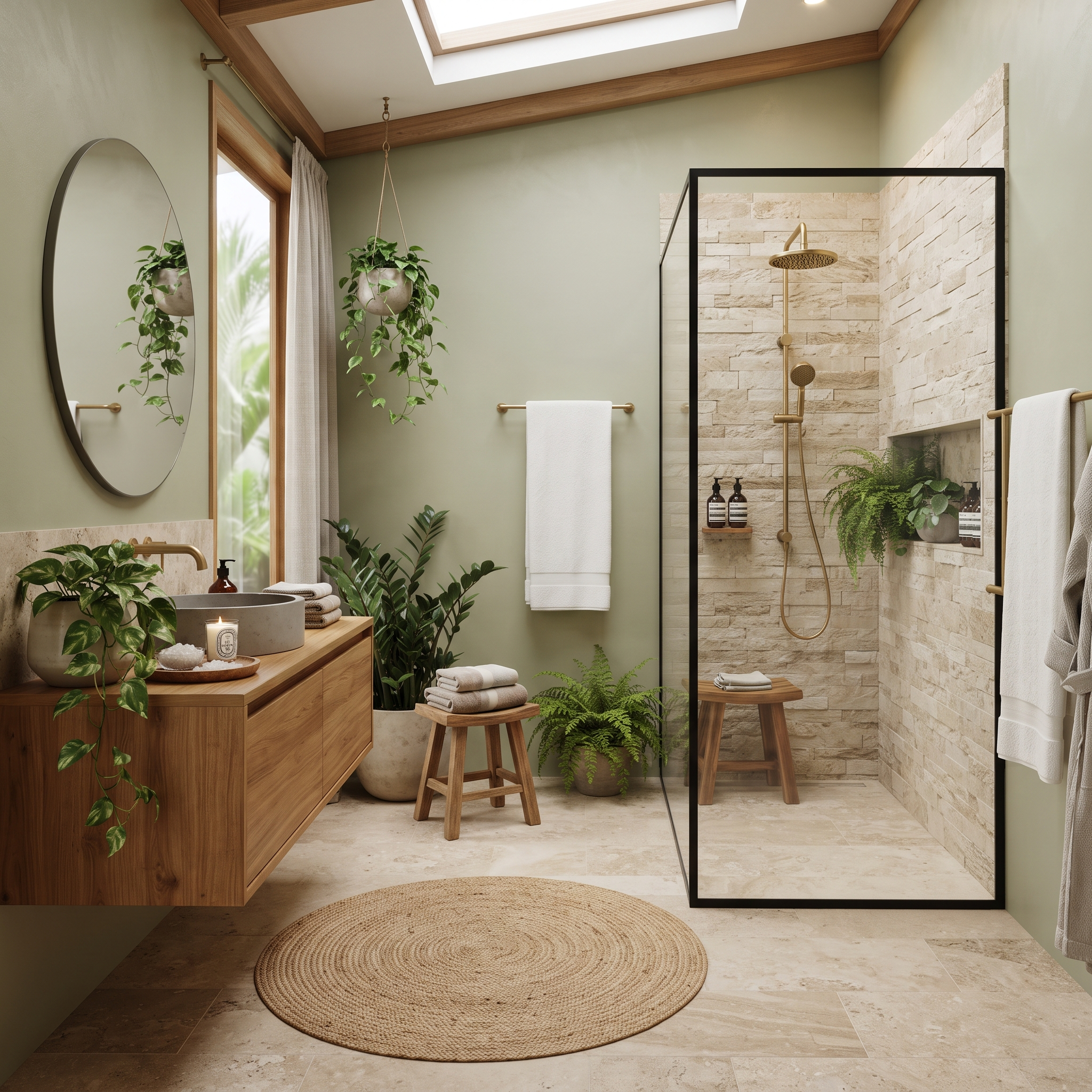
Living moss panel on one wall, skylight above the shower, pebble strip shower floor, teak bath mat, and a single trailing plant.
Master Bathroom
Full living green wall, soaking tub facing a window onto trees, walk-in shower with stone walls, and a skylight running the full length.
Powder Room
Stone vessel basin on an unfinished teak slab, small living wall panel, framed window onto greenery, and a single hanging plant.
How Much Does a Biophilic Bathroom Remodel Cost?
Biophilic bathrooms trend toward the higher end because living systems and custom architecture cost real money. A living green wall with irrigation runs $200–$600 per square foot installed. Skylights cost $1,500–$4,000 each plus structural work. Rammed earth or polished plaster walls run $40–$100 per square foot. Cork flooring is $8–$18 per square foot. A custom stone soaking tub positioned to frame an outdoor view is $5,000–$15,000. Irrigation, drainage, and grow-lighting for the living wall add another $1,000–$3,000. Save by using preserved moss panels (no irrigation, $50–$150 per square foot) instead of living walls, and by choosing one large window or skylight rather than multiple.
Frequently Asked Questions
Do living plant walls work in a humid bathroom?
Yes, beautifully — bathroom humidity is ideal for ferns, moss, and pothos. You still need full-spectrum grow lights if natural light is weak, and an irrigation or manual misting routine. Preserved moss panels are a low-maintenance alternative: they need no water or light and last years, though they cannot photosynthesise or purify air.
How is biophilic design different from just having plants?
Houseplants are decoration; biophilic design integrates nature into the architecture — living walls, skylights, framed views onto real trees, natural airflow, organic materials, and water sounds. Plants are one tool; the broader strategy is shaping the room around the human response to nature. A bathroom with one fern is not biophilic; a bathroom designed around daylight and natural materials is.
Can I do biophilic design without a window?
Yes, but it costs more. You need full-spectrum grow lights for plants, a sun-mimicking LED panel for the human occupants, an indoor water feature for natural sound, and a high-capacity extractor for airflow. Use preserved moss and large-format nature photography. Without real daylight the effect is reduced, but a well-designed windowless biophilic bathroom still outperforms a generic one.
Explore More Bathroom Design Styles
Ready to see biophilic style on your bathroom?
Upload Your Photo →