Zen Bathroom Design
Try Zen Style on Your Bathroom →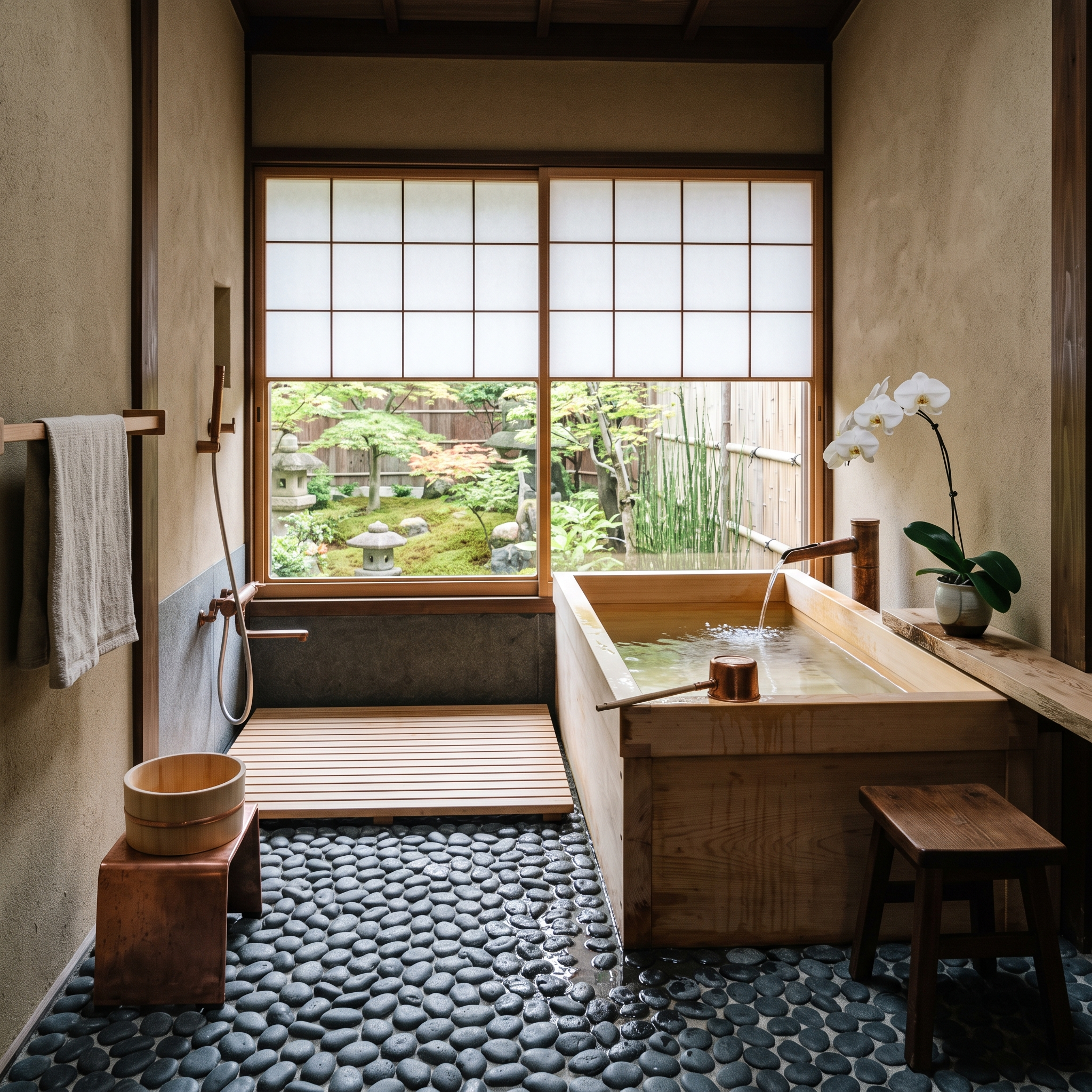
What is Zen Bathroom Design?
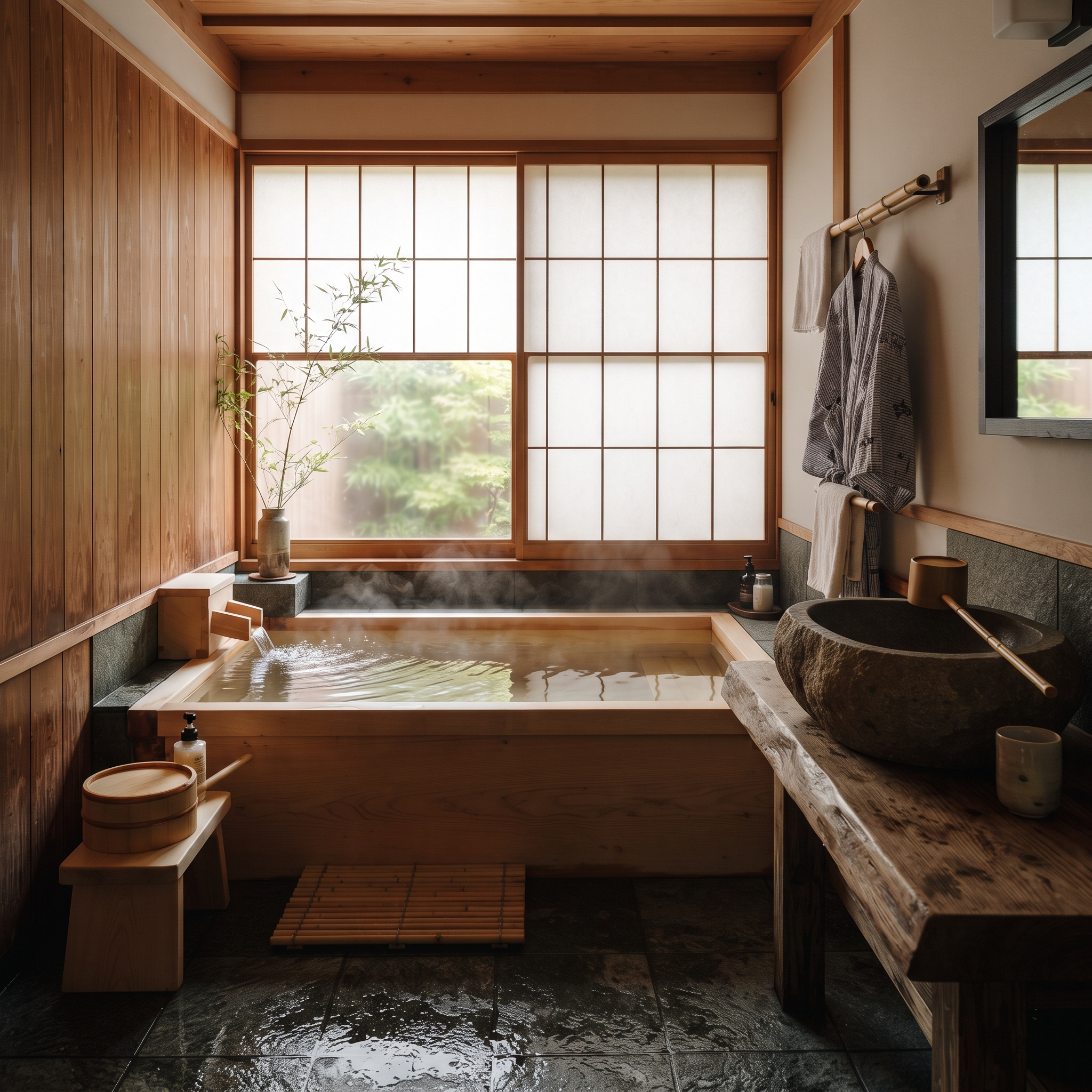
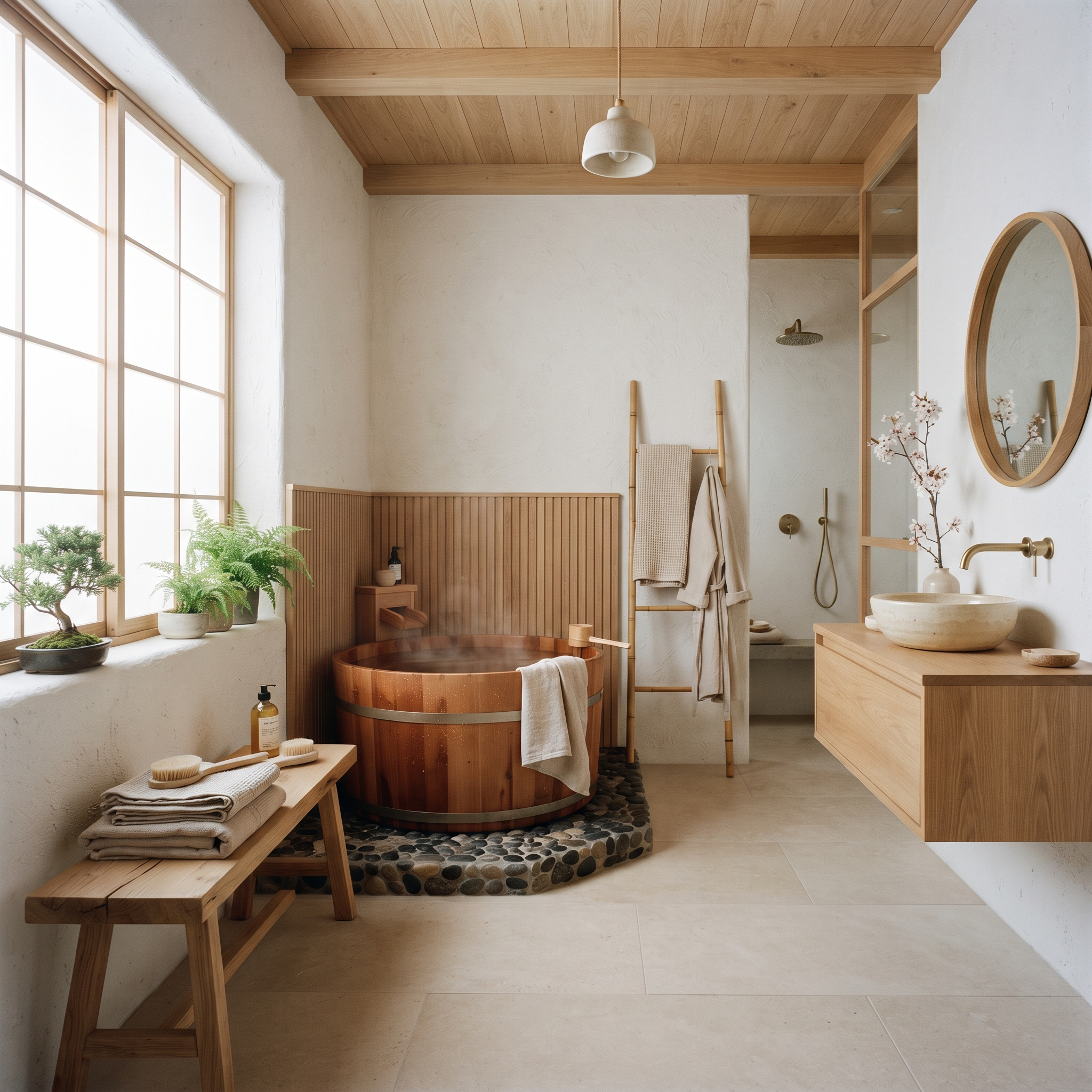
A zen bathroom is designed around silence, balance, and the principle that less presence creates more calm. The look draws directly from Japanese tea-house architecture and Zen Buddhist aesthetics — tatami proportions, natural materials, and an absence of anything decorative that does not also serve a purpose. A zen bathroom typically features a deep soaking tub (an ofuro) positioned low to the ground, a wooden stool and bucket for traditional washing, and a vanity in pale hinoki cypress or cedar. Walls stay plain — limewash, microcement, or vertical-grain timber — in tones of paper white, stone grey, and warm sand. Fixtures are minimal and matte: black or brushed stainless, never ornate. A single ikebana arrangement — three stems in a handmade vase — may be the only object on display. Lighting is soft and directional, often from a paper lantern or concealed LED strip. Natural light enters through a shoji screen or a high slot window. A zen bathroom should feel like the moment before a meditation session begins.
Key Characteristics of a Zen Bathroom
- Deep Japanese ofuro soaking tub positioned low to the ground, not raised on a deck
- Hinoki cypress or cedar wood on vanity, bath surround, and wooden bath accessories
- Plain walls in limewash, microcement, or vertical-grain timber — paper white to warm sand
- Minimal matte fixtures — black or brushed stainless, never ornate or polished chrome
- Wooden washing stool and bucket alongside the tub, in the traditional Japanese style
- Single ikebana arrangement — three stems in a handmade ceramic vase as the only decoration
- Soft directional lighting from paper lanterns, concealed LED, or a single slot window
Best Materials
Zen Bathroom Ideas for Every Space
Small Bathroom
Microcement walls and floor, deep soaking tub, hinoki wood bath shelf, single black wall-mounted tap, and one ikebana stem in a vase.
Master Bathroom
Ofuro tub beside a slot window, hinoki cypress vanity, microcement walls, traditional stool and bucket, and a paper lantern overhead.
Powder Room
Limewash walls, stone vessel basin on a hinoki shelf, matte black tap, single handmade vase with a single branch, and concealed lighting.
How Much Does a Zen Bathroom Remodel Cost?
Zen bathrooms sit at the upper-mid range because hinoki cypress and deep soaking tubs carry real cost. A hinoki ofuro soaking tub runs $3,000–$8,000 plus deep-drain plumbing. Hinoki cypress vanities cost $1,500–$4,000. Microcement on walls and floor runs $60–$120 per square foot installed. Limewash is comparatively affordable at $8–$20 per square foot. Matte black Japanese-style fixtures (try Waterworks or DXV) cost $250–$600 each. A custom shoji screen with washi paper is $600–$2,000. Save by choosing cedar instead of hinoki (similar look, half the price), and by using microcement on one wall rather than the whole room.
Frequently Asked Questions
How is zen different from minimalist?
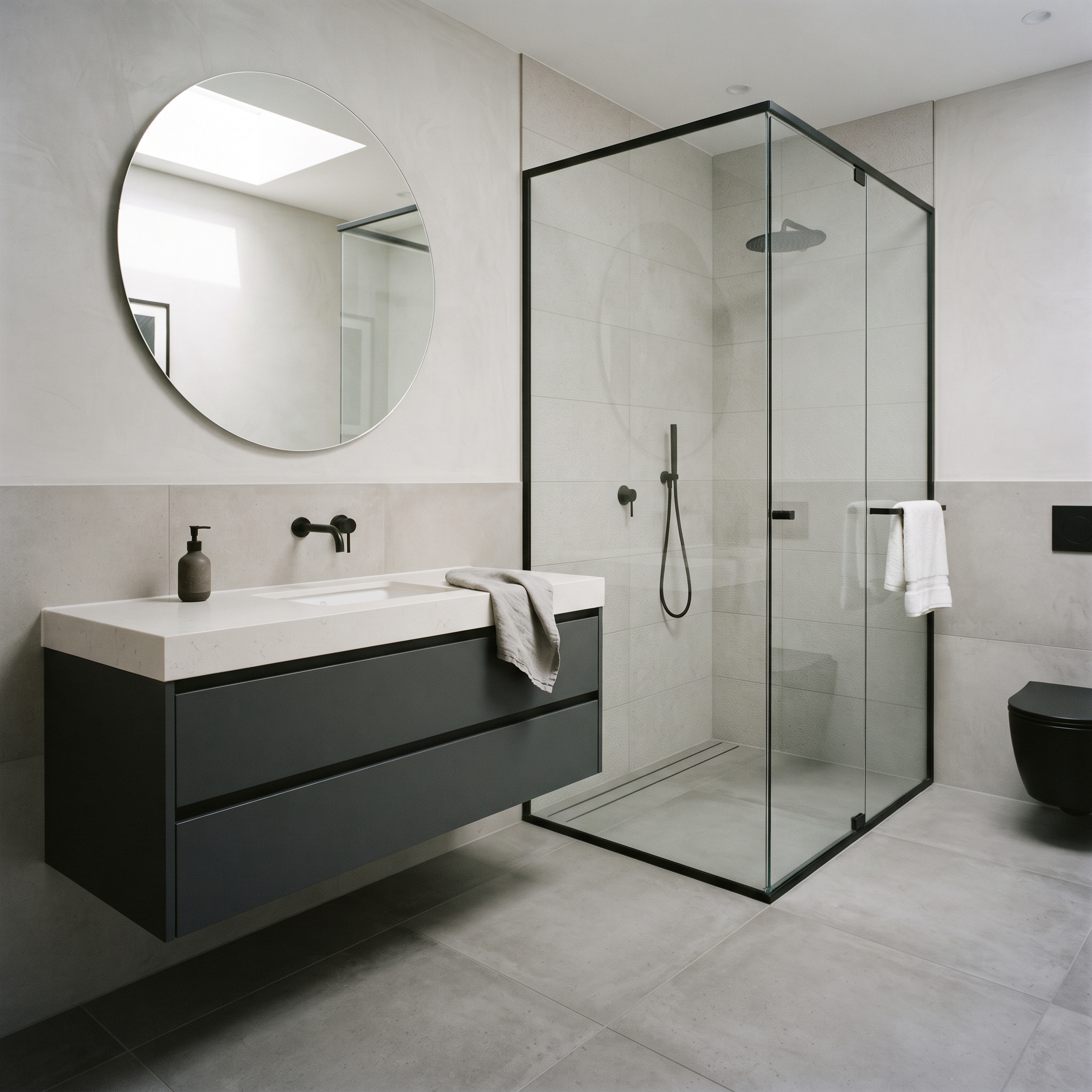
Both use restraint, but zen draws specifically from Japanese tea-house tradition — natural wood, soaking tubs, paper lanterns, ikebana. Minimalism is broader and more architectural — microcement, frameless glass, hidden storage. Zen embraces warmth and ritual (the washing stool, the soak); minimalism prioritises pure visual restraint. Zen feels like a temple; minimalism feels like a gallery.
What is hinoki wood and why is it so expensive?
Hinoki is a Japanese cypress prized for its straight grain, lemon scent, and natural resistance to moisture — it is the traditional wood of Japanese baths and temples. Most is grown and milled in Japan (Kiso hinoki is the benchmark), which drives the price. Alternatives with a similar look: Port Orford cedar, Alaskan yellow cedar, or Atlantic white cedar — all far cheaper and more sustainable.
Do I need a Japanese-style deep soaking tub for a zen bathroom?
It helps but is not required. A standard deep soaking tub or even a Japanese-style drop-in tub works if the proportions are right. What matters more is the room around the tub: a wood bath shelf, a stool and bucket, soft directional lighting, and an uncluttered wall. The bath ritual defines the zen bathroom more than the tub itself.
Explore More Bathroom Design Styles
Ready to see zen style on your bathroom?
Upload Your Photo →