Traditional Bathroom Design
Try Traditional Style on Your Bathroom →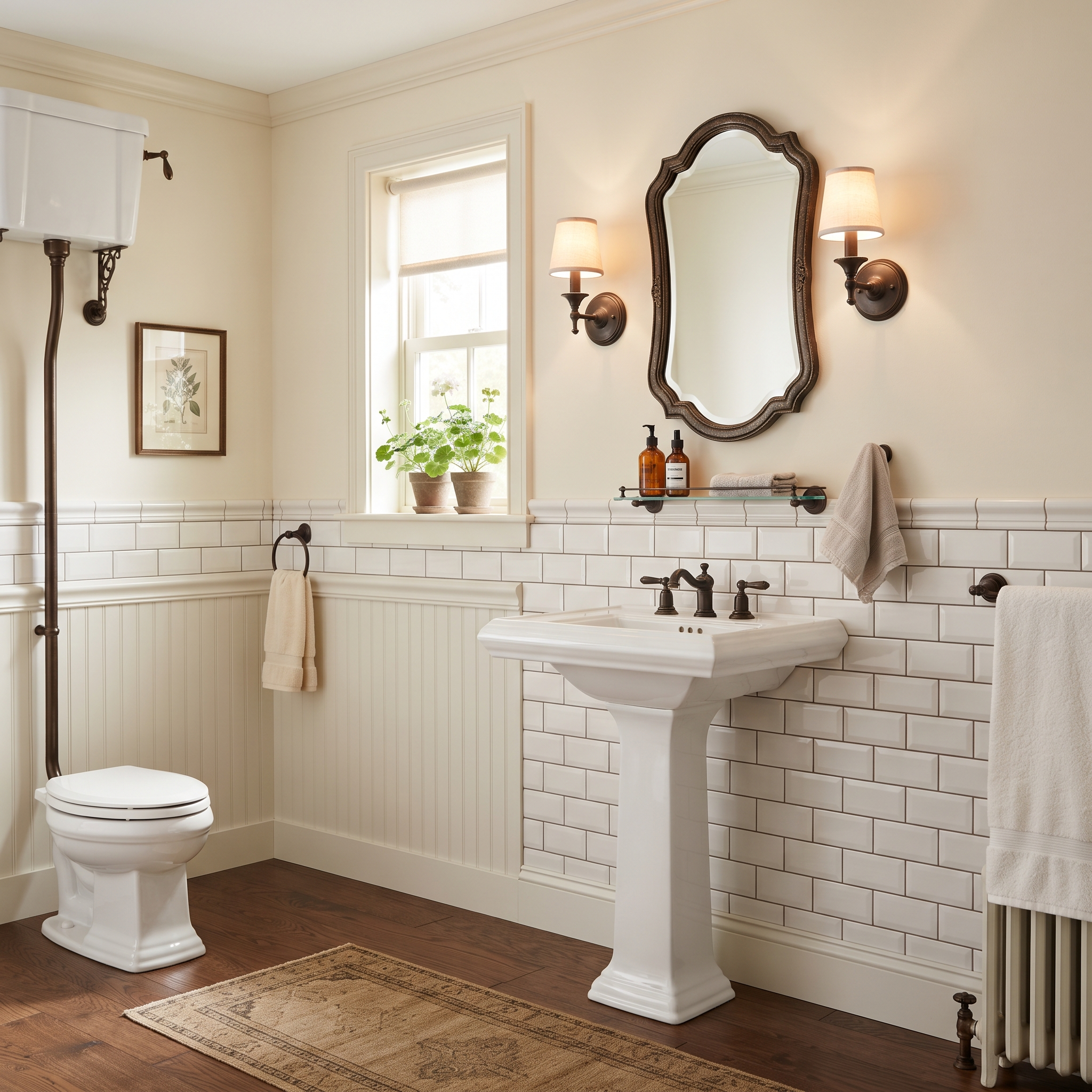
Try It on Your Bathroom
Upload a photo and see your bathroom transformed in Traditional style.
No photo = we invent a generic bathroom — upload yours above to redesign your real room
Free account · 3 redesigns daily · no credit card
Upload your bathroom photo and hit redesign — or browse the styles below.
What is Traditional Bathroom Design?
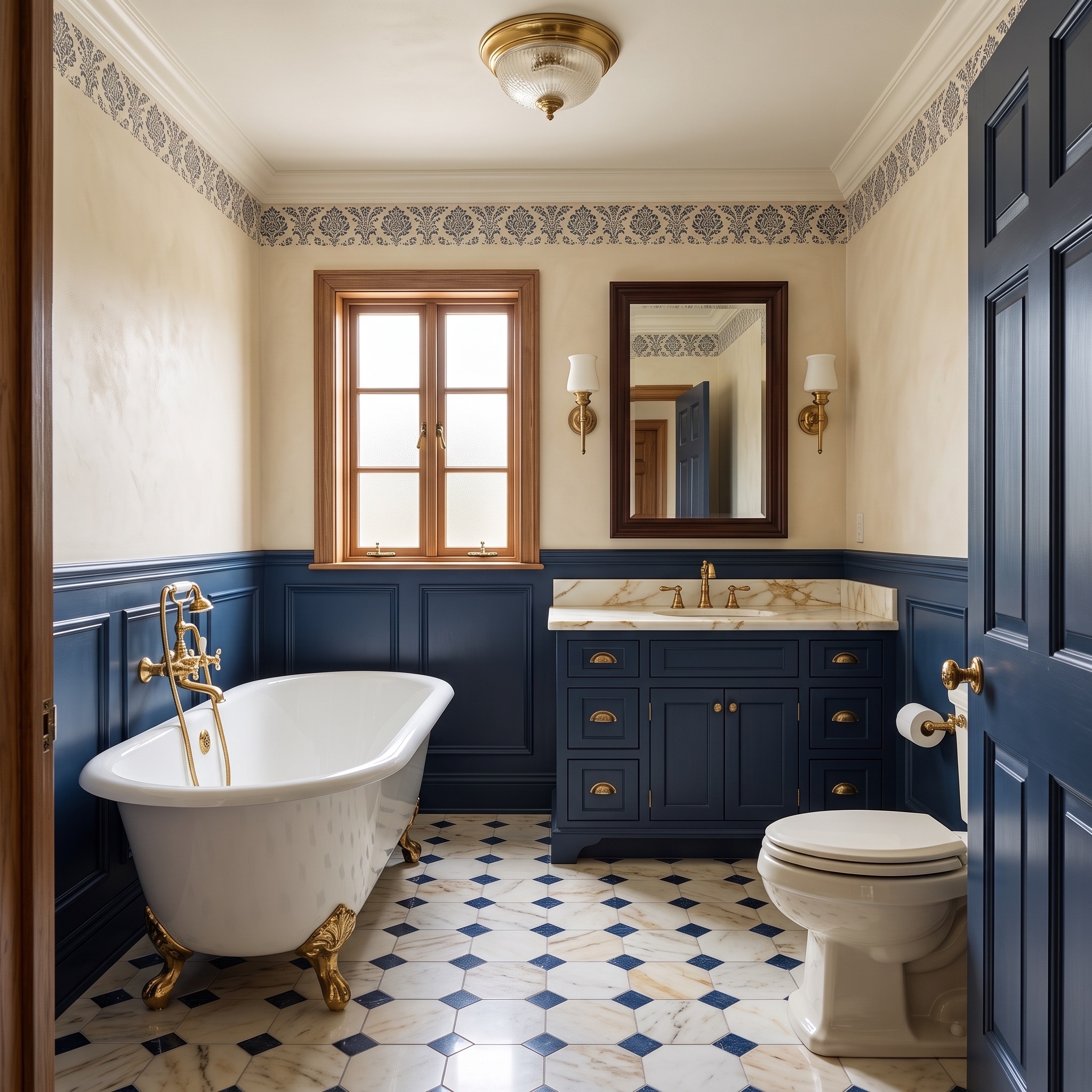
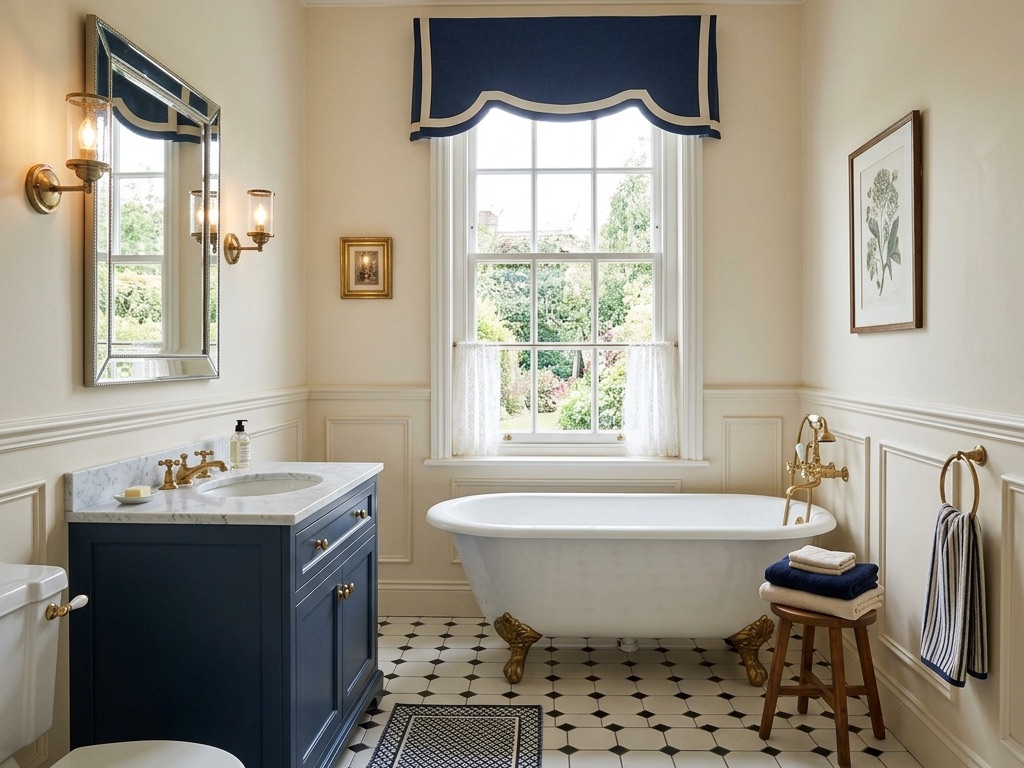
Traditional bathroom design draws from early twentieth-century craftsmanship and never goes out of style. Picture a gleaming clawfoot tub as the centrepiece, wainscoting panels running halfway up the wall, and a marble countertop on a painted vanity. Brass fixtures — taps, shower fittings, towel rails — warm the white backdrop the way chrome never can. A framed mirror with bevelled edges hangs above the vanity, lit by vintage sconces with frosted glass shades. Hexagonal floor tile in white and black or a classic basket-weave pattern runs underfoot. The palette stays restrained and warm: cream and navy as the anchors, soft white and sage as accents. A traditional bathroom feels permanent and considered, like it has always been there and always will be.
Want a different direction? Explore our Minimalist Bathroom Design, Industrial Bathroom Design and Modern Bathroom Design guides. Prefer a five-star hotel feel? See our Luxury Bathroom Design guide.
Key Characteristics of a Traditional Bathroom
- A clawfoot tub as the centrepiece — cast-iron with brass claw feet
- Wainscoting panels — beadboard or raised-panel — wrapping the lower walls, topped with a chair-rail trim
- Marble countertop on a painted raised-panel vanity, not a bare pedestal
- Brass fixtures — taps, shower fittings, towel rails — warm and patinaed, never chrome or matte black
- Framed mirrors with bevelled edges, lit by vintage sconces with frosted glass shades
- Hexagonal or basket-weave floor tile in white, black, and soft grey
- Warm cream and navy palette — zero bright, neon, or cold-grey tones
Best Materials
Traditional Bathroom Ideas for Every Space
Small Bathroom
White subway tile wainscoting, pedestal sink, hex floor tile, and a single chrome towel ring — timeless in 4 square metres.
Master Bathroom
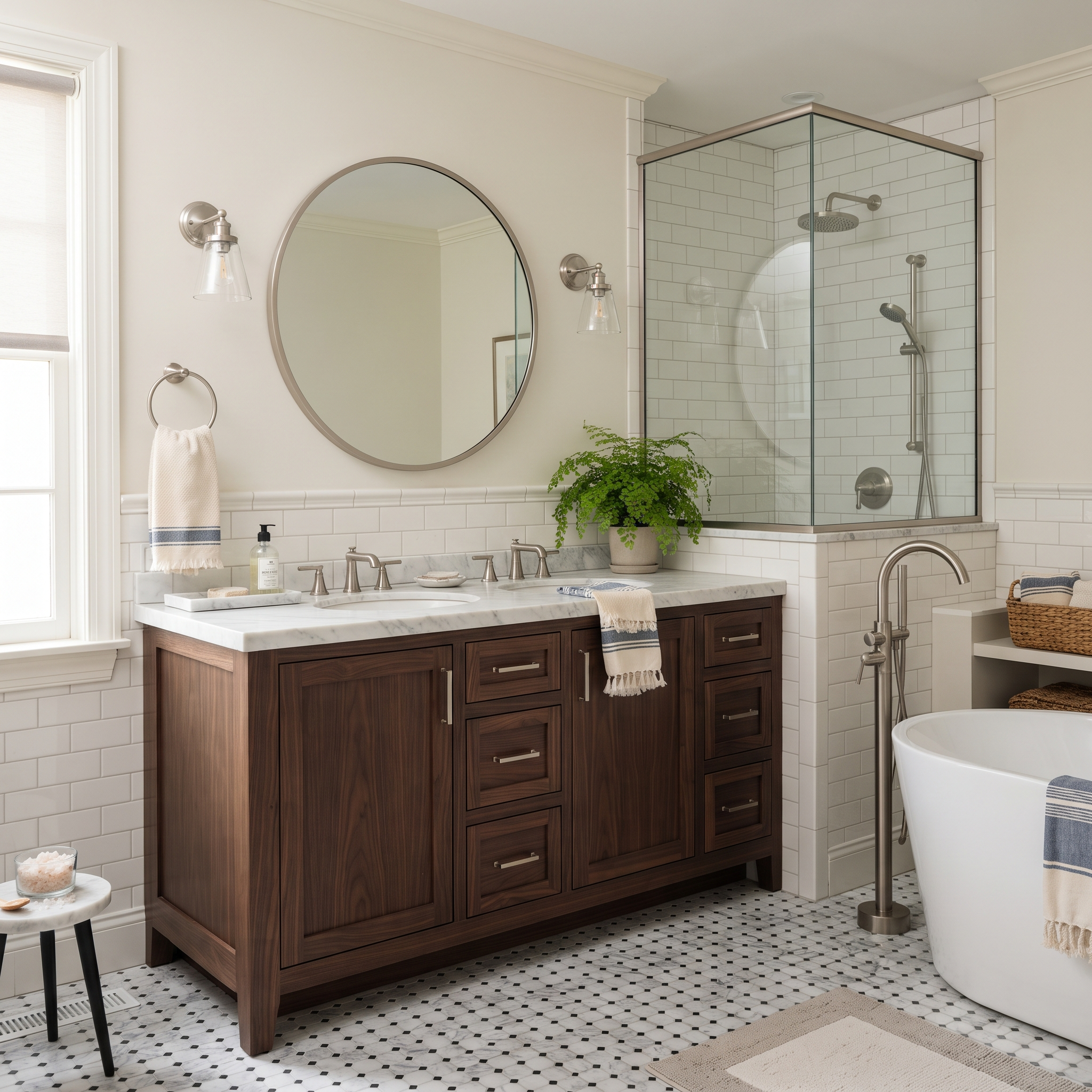
Double console sink with nickel taps, clawfoot tub in white, separate walk-in shower with subway walls and a niche, and wainscoting throughout.
Powder Room
Pedestal sink, framed botanical print, hex tile floor in black-and-white, and a sconce with a frosted glass shade on either side of the mirror.
How Much Does a Traditional Bathroom Remodel Cost?
Traditional bathrooms are mid-range because the signature materials are widely available and affordable. Subway tile costs $4–$12 per square foot. Hexagonal floor tile runs $6–$15. A pedestal sink is $300–$800 — significantly cheaper than a vanity and countertop combination. Brass fixtures cost more than chrome ($200–$500 per tap) but develop a warm patina that lasts decades. The main cost driver is labour: wainscoting installation, chair-rail trim, and precise subway tile layout take longer than a standard tile job. Clawfoot tubs ($1,200–$3,500) plus their plumbing rough-in ($1,500+) push the total toward the upper end of the range.
Traditional Bathroom Transformations
Real users. Real results. Generated with our AI.
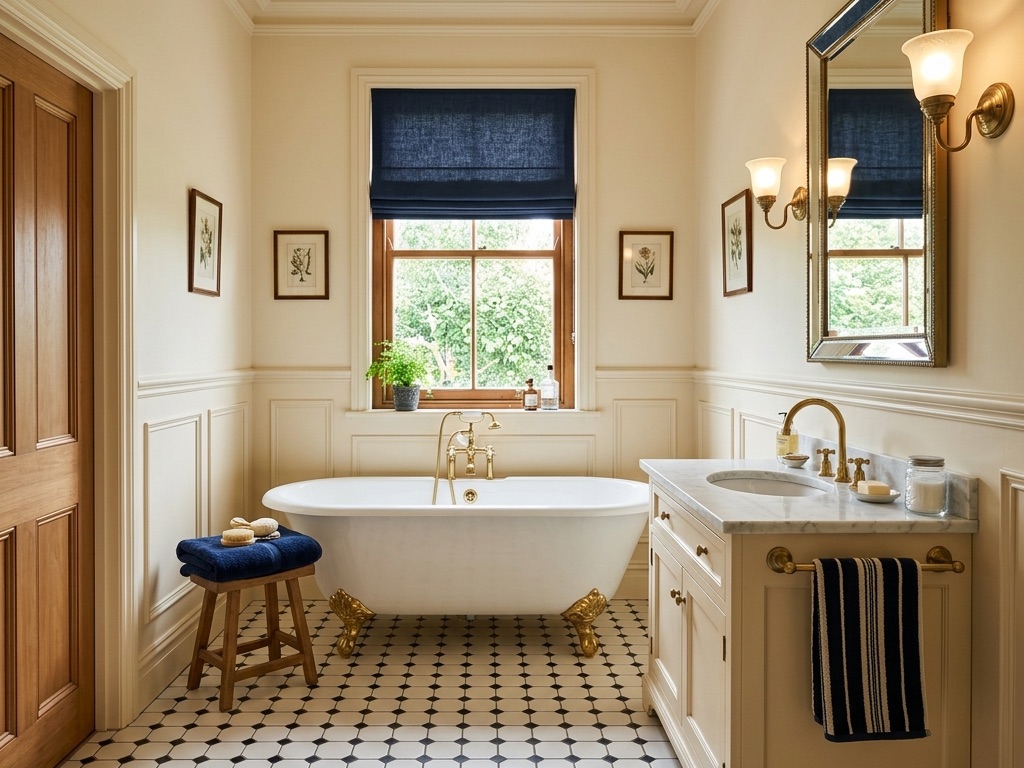
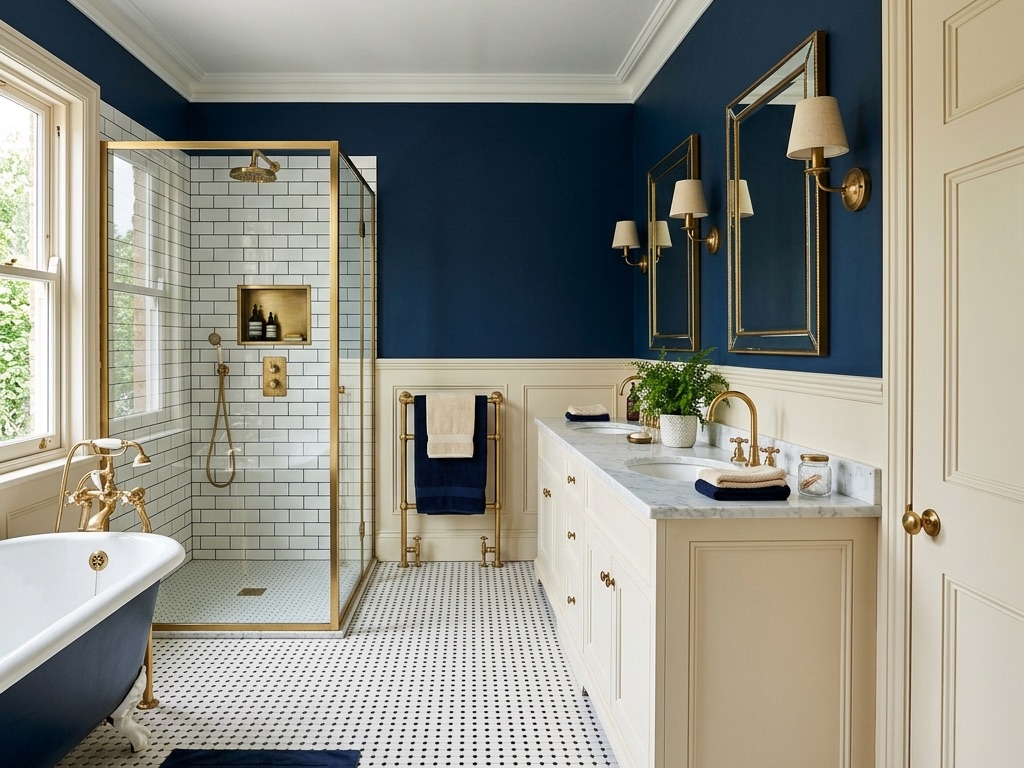
Example results shown. Generate your own above — your redesign appears here.
Frequently Asked Questions
What is a traditional bathroom?
A traditional bathroom is rooted in early-twentieth-century craftsmanship: a clawfoot tub as the centrepiece, wainscoting panels wrapping the lower walls, and a painted vanity with a marble countertop. Fixtures are brass — taps, shower fittings, towel rails — chosen for the warm patina they develop, never cold chrome or matte black. A framed bevelled mirror hangs above the vanity, lit by vintage sconces with frosted glass shades. The palette is warm cream and navy with soft white accents, the floor is hex or basket-weave tile, and every element reads as permanent and considered rather than trendy.
What colors are traditional bathrooms?
The anchor palette is warm cream and navy — cream on the wainscoting, walls and vanity, navy as the confident accent on a lower wall, a window treatment or the vanity itself. Soft white, antique white and pale sage fill in around them, and brass fixtures supply the warmth that ties it together. Traditional bathrooms avoid cold greys, stark pure white, bright primaries and anything neon or high-gloss; the look is layered, warm and restrained, not crisp or clinical.
What is the difference between traditional and classic bathrooms?
The two overlap heavily, but 'traditional' is the broader category — any bathroom drawing on early-twentieth-century detailing such as wainscoting, a clawfoot tub, brass fixtures, a marble countertop and a framed mirror. 'Classic' leans more specifically toward timeless, symmetrical, formal compositions, often with a stricter black-and-white or cream-and-navy palette and more architectural restraint. Put simply: a clawfoot tub with wainscoting and brass is traditional; when that same bathroom is balanced, symmetrical and pared back to its most timeless bones, it reads as classic.
Explore More Bathroom Design Styles
Ready to see traditional style on your bathroom?
Upload Your Photo →